The bathroom is one of the most dangerous areas in the home for older adults. Small safety improvements can significantly reduce fall risks and help seniors maintain independence.
When families begin thinking about home safety for an aging parent, the bathroom is often the first place that deserves attention.
Wet floors.
Slippery surfaces.
Low toilet seats.
High bathtub walls.
These everyday features can quickly become serious hazards as balance, mobility, and strength change with age.
The good news is that creating a safer bathroom does not require a complete renovation.
A few practical adjustments can make a significant difference.
Many of these bathroom risks are similar to the hidden fall hazards families often overlook elsewhere in the home.
Before your next visit, here are five essential bathroom safety improvements worth considering.
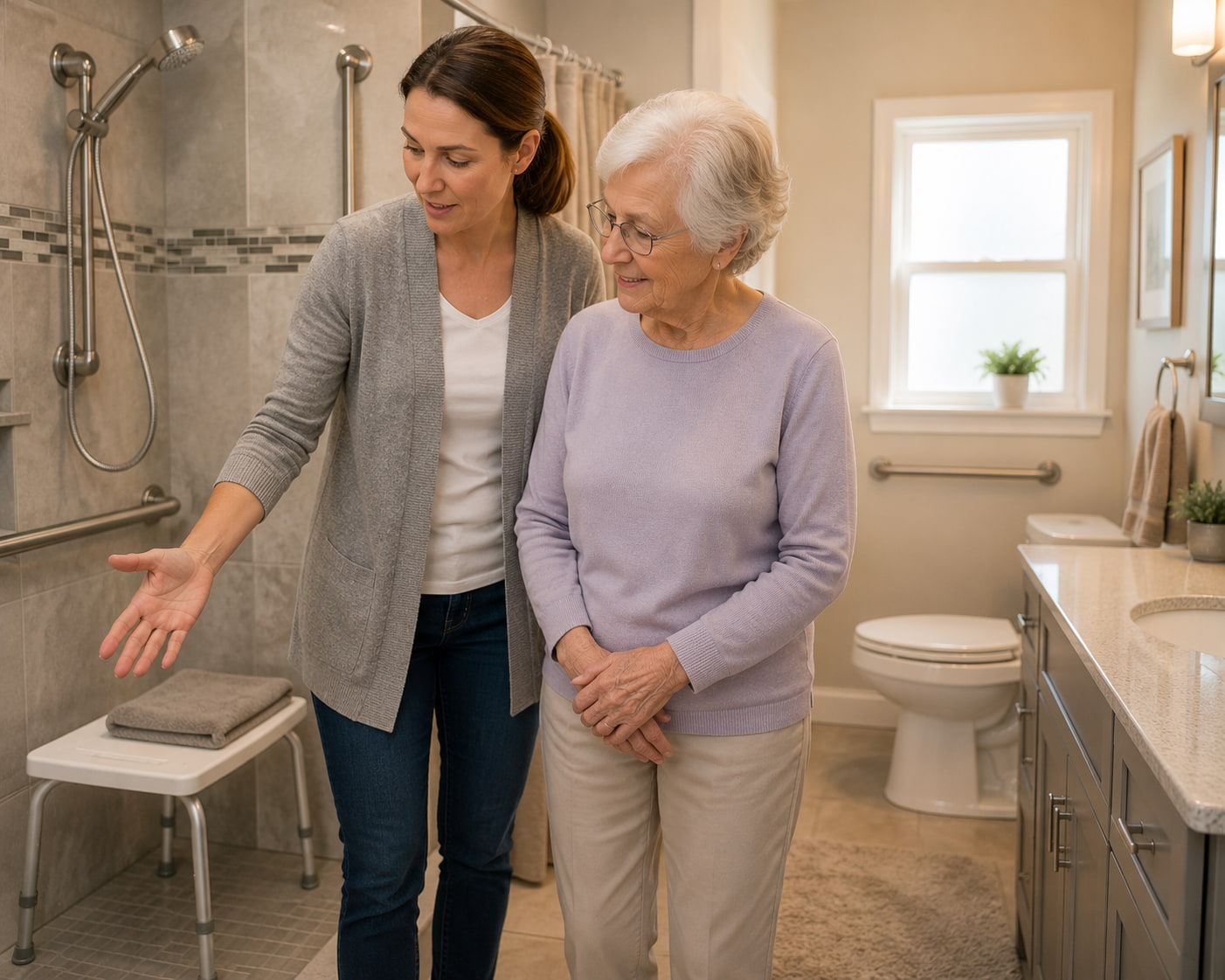
1. Install Grab Bars in Key Locations
Many older adults instinctively reach for nearby objects when they lose balance.
Unfortunately, towel racks and shower doors are not designed to support body weight.
Families should consider:
• Grab bars inside the shower
• Grab bars near the bathtub entrance
• Grab bars beside the toilet
Properly installed grab bars provide stability and confidence during daily routines.
Frequently Asked Questions
Are suction-cup grab bars safe?
Temporary suction grab bars may shift unexpectedly. Permanently installed grab bars provide the most reliable support.
What is the best toilet height for seniors?
Raised toilet seats or comfort-height toilets are often easier for older adults with mobility or joint issues.
How can I reduce slipping in a bathtub?
Non-slip strips, rubber bath mats, and grab bars can help reduce the risk of slipping.
2. Consider a Raised Toilet Seat
Getting up from a low toilet can become difficult for seniors with arthritis, muscle weakness, or balance concerns.
Warning signs include:
• Using nearby furniture for support
• Difficulty standing up smoothly
• Complaints of knee or hip discomfort
A raised toilet seat can make daily bathroom use safer and more comfortable.
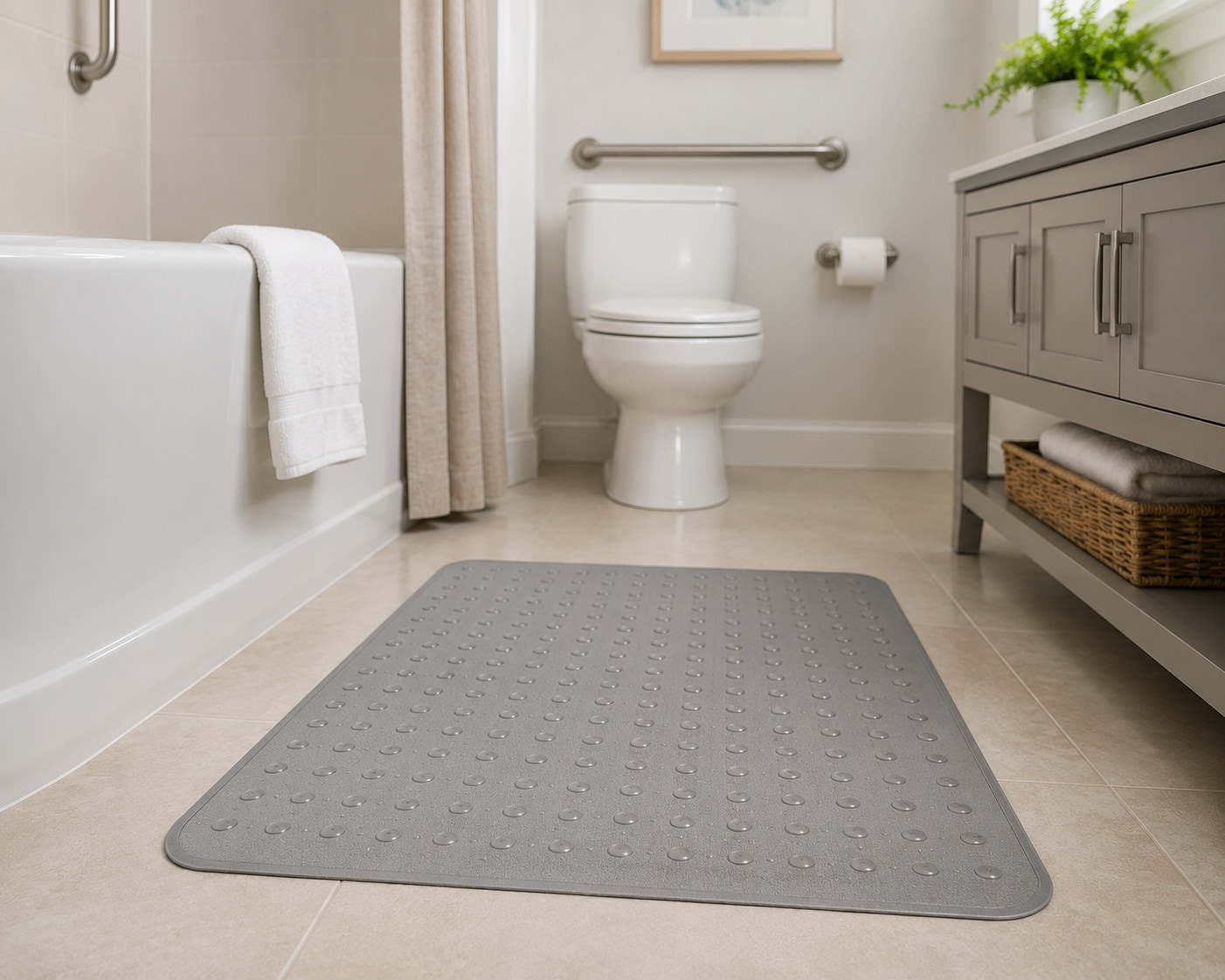
3. Replace Loose Bath Mats
Many decorative bath mats become dangerous when exposed to water.
Watch for:
• Mats that slide easily
• Curled edges
• Thick mats that create uneven surfaces
Choose non-slip mats designed specifically for bathroom safety.
4. Use a Shower Chair and Handheld Shower Head
Bathing can become physically demanding for older adults.
Helpful safety additions include:
• A sturdy shower chair
• A handheld shower head
• Easy access to bathing supplies
These changes can reduce fatigue and improve stability during bathing.
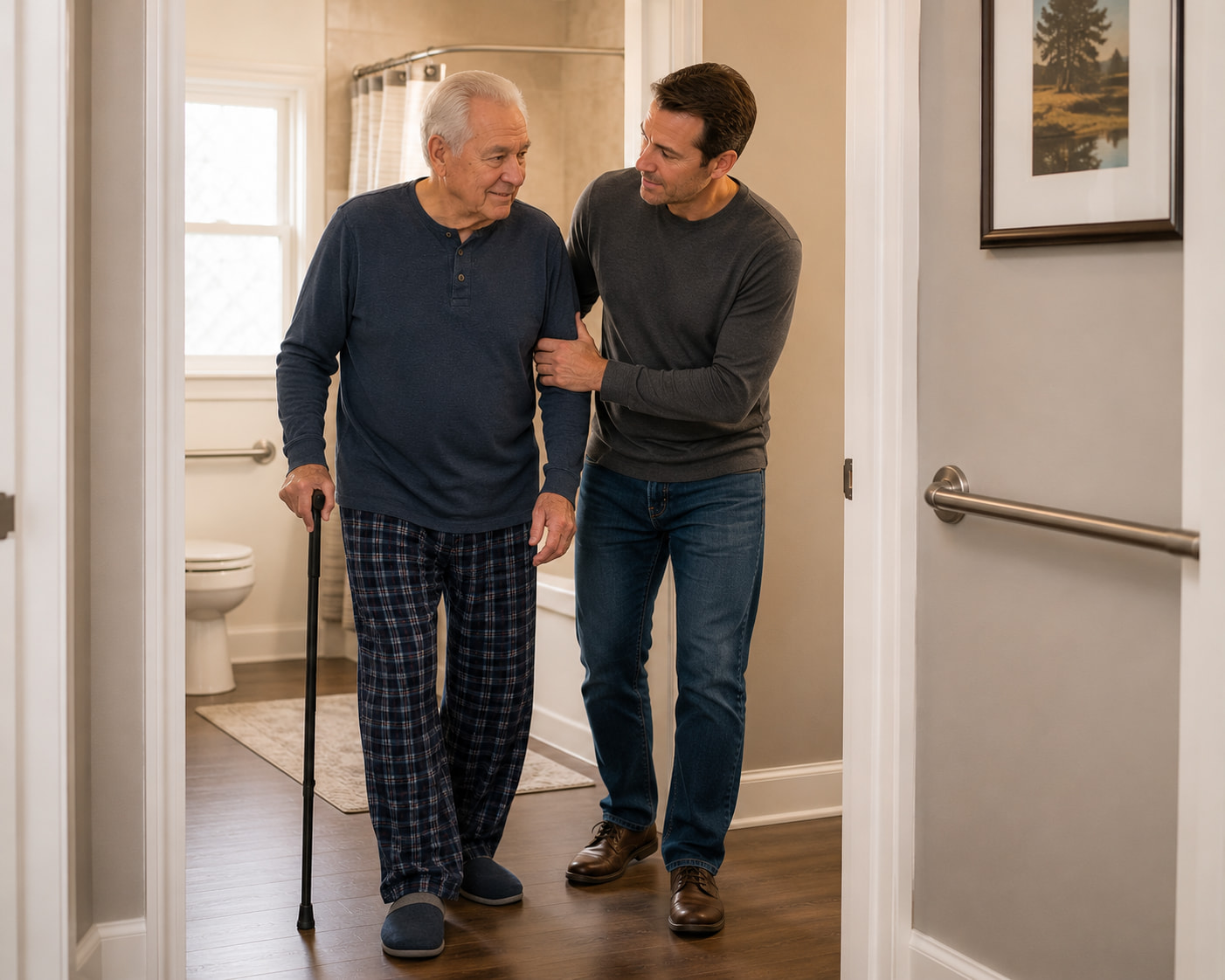
5. Keep Bathroom Pathways Clear
Many falls occur before a senior even reaches the shower or toilet.
Families should remove:
• Laundry baskets
• Loose cords
• Extra storage items
• Floor clutter
Clear pathways improve safety and reduce tripping hazards.
6. Small Safety Changes Protect Independence
Many parents worry that safety modifications signal a loss of independence.
In reality, the opposite is often true.
Simple improvements help older adults remain confident, comfortable, and independent in their own homes for longer.
Conclusion
Bathroom accidents are often preventable.
A secure grab bar.
A safer bath mat.
A clear pathway.
These simple changes can dramatically reduce fall risks and provide peace of mind for both seniors and their families.
By addressing bathroom safety early, caregivers can help aging parents continue living safely at home.
Related Posts
- 5 Hidden Fall Hazards in Your Aging Parent's Home
- How to Reduce Fall Risk at Home for Seniors
- Best Safety Devices for Elderly Living Alone at Home
- Nursing Home vs Home Care: Which Is Better for Aging Parents?
Sources
National Institute on Aging (NIA)
Centers for Disease Control and Prevention (CDC)
National Council on Aging (NCOA)
Occupational Safety and Health Administration (OSHA)
Image Source
Magnific
AI-generated images