Many falls happen during everyday routines at home. These hidden hazards are often overlooked until an accident occurs.
When families think about fall prevention, they usually focus on the obvious dangers.
A slippery bathtub.
A steep staircase.
A loose handrail.
But many falls happen somewhere else entirely.
They occur during normal daily routines, in familiar spaces that have felt safe for years.
As parents age, balance, vision, reaction time, and mobility naturally change. Small obstacles that once seemed harmless can become significant safety risks.
Before your next visit, here are five hidden fall hazards worth checking around the home.
1. Area Rugs That Shift Underfoot
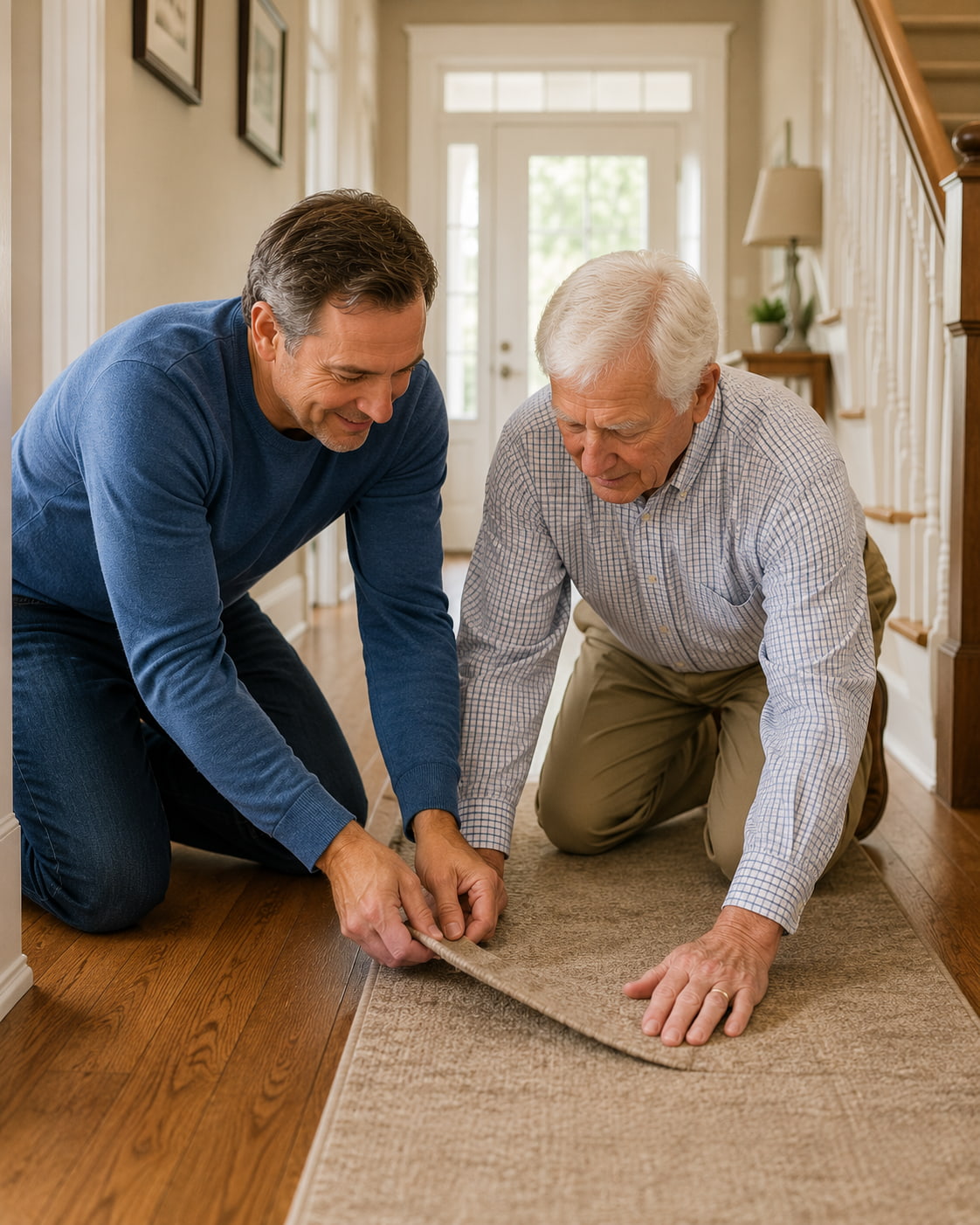
Area rugs are one of the most common household trip hazards.
Families often overlook:
• Rugs that slide on hardwood floors
• Curled rug edges
• Small rugs placed in hallways
• Rugs layered over carpeting
Even a slight edge can catch a foot or mobility aid.
Frequently Asked Questions
What is the most common cause of falls at home?
Falls often result from a combination of balance changes, poor lighting, clutter, loose flooring, and mobility challenges.
Are falls a normal part of aging?
No. While fall risk increases with age, many falls can be prevented through safety improvements and regular monitoring.
How often should families check for fall hazards?
A basic home safety review every few months can help identify new risks before accidents occur.
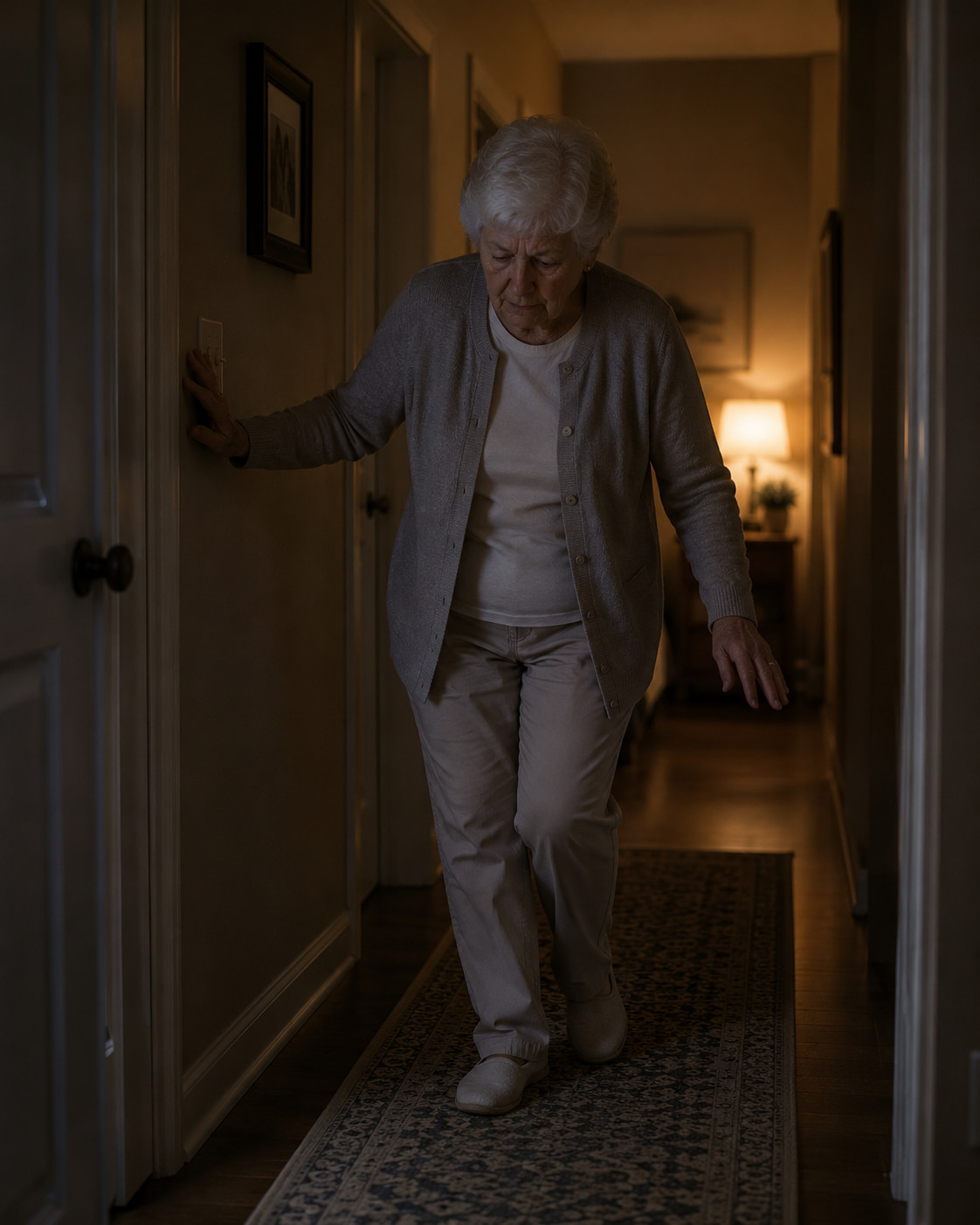
2. Poor Lighting in Everyday Areas
Many older adults require significantly more light than younger adults.
Watch for:
• Dark hallways
• Dim staircases
• Poor bathroom lighting
• Difficult-to-reach switches
Nighttime bathroom trips are especially risky when visibility is limited.
3. Floor Transitions Between Rooms
Small height differences between rooms are easy to miss.
Examples include:
• Carpet to tile transitions
• Door thresholds
• Raised flooring sections
These changes may increase the risk of tripping, especially for seniors using walkers or canes.
4. Unsupportive Slippers and Socks
The problem is not always the home itself.
Footwear matters too.
Potential hazards include:
• Loose slippers
• Backless shoes
• Smooth socks on hard floors
Supportive footwear can significantly reduce fall risk.
5. Everyday Clutter Along Walking Paths
Many falls occur near furniture and frequently used living areas.
Families should look for:
• Extension cords
• Magazine stacks
• Small storage boxes
• Pet bowls
Removing these obstacles often creates immediate safety improvements.

6. Small Changes Make a Big Difference
Many families assume preventing falls requires major renovations.
In reality, some of the most effective improvements are simple:
• Better lighting
• Clear walking paths
• Secured rugs
• Supportive footwear
Small adjustments can significantly improve safety and confidence.
Conclusion
The most dangerous fall hazards are often the ones that blend into everyday life.
A rug that has always been there.
A dim hallway.
A cluttered corner near a favorite chair.
By identifying these hidden risks early, families can help aging parents remain safer, more independent, and more confident in their own homes.
Related Posts
- How to Reduce Fall Risk at Home for Seniors
- Signs an Elderly Parent May Be Struggling at Home
- Signs an Elderly Parent Needs More Help at Home
- They Stopped Going Outside — Small Mobility Changes Families Often Notice First
Sources
Centers for Disease Control and Prevention (CDC)
National Institute on Aging (NIA)
National Council on Aging (NCOA)
World Health Organization (WHO)
Image Source
Magnific
AI-generated images