Age-related decline in natural thirst perception increases the risk of chronic dehydration in older adults. Establishing structured daily fluid routines and offering water-rich foods protects your aging parent's physical vitality and mental clarity.
As people age, the body's natural ability to regulate fluid balance undergoes significant changes. The neurological mechanism that signals thirst becomes far less sensitive, meaning an older adult can experience severe fluid loss without ever feeling thirsty or reaching for a glass of water.
Many family members mistakenly attribute sudden lethargy, dizziness, or minor memory lapses to normal cognitive decline, unaware that chronic dehydration is the underlying trigger. Left unmanaged, inadequate fluid intake can lead to urinary tract infections, severe kidney stress, and sudden hospitalizations.
Here are five practical ways to prevent senior dehydration and maintain optimal body hydration at home.
1. Understand Age-Related Thirst Sensitivity Loss
Recognizing that seniors do not rely on natural thirst cues is the foundational step in managing daily fluid intake.
Do not wait for your aging parent to ask for water. Because their physiological thirst response is diminished, relying on them to self-regulate fluids usually results in under-hydration. Caregivers must take an active role in offering fluids at predictable, structured intervals throughout the day regardless of whether the parent expresses a desire to drink.

Frequently Asked Questions
Q. What are the earliest warning signs of dehydration in an elderly parent?
Early indicators include unusually dark yellow urine, dry mouth, sudden fatigue, dry skin with reduced elasticity, and unexpected episodes of dizziness when standing up from a chair.
Q. Can chronic dehydration cause sudden confusion or delirium in seniors?
Yes. Fluid loss can disrupt electrolyte balance, which may contribute to acute confusion or delirium that sometimes resembles rapid cognitive decline.
Q. How much fluid should an older adult drink each day?
Many older adults benefit from approximately 6–8 cups (about 1.5–2 liters) of fluids daily, although individual needs vary depending on medical conditions. Always follow guidance from a healthcare professional.
2. Introduce Water-Rich Foods into Daily Meals
Plain water is not the only source of hydration.
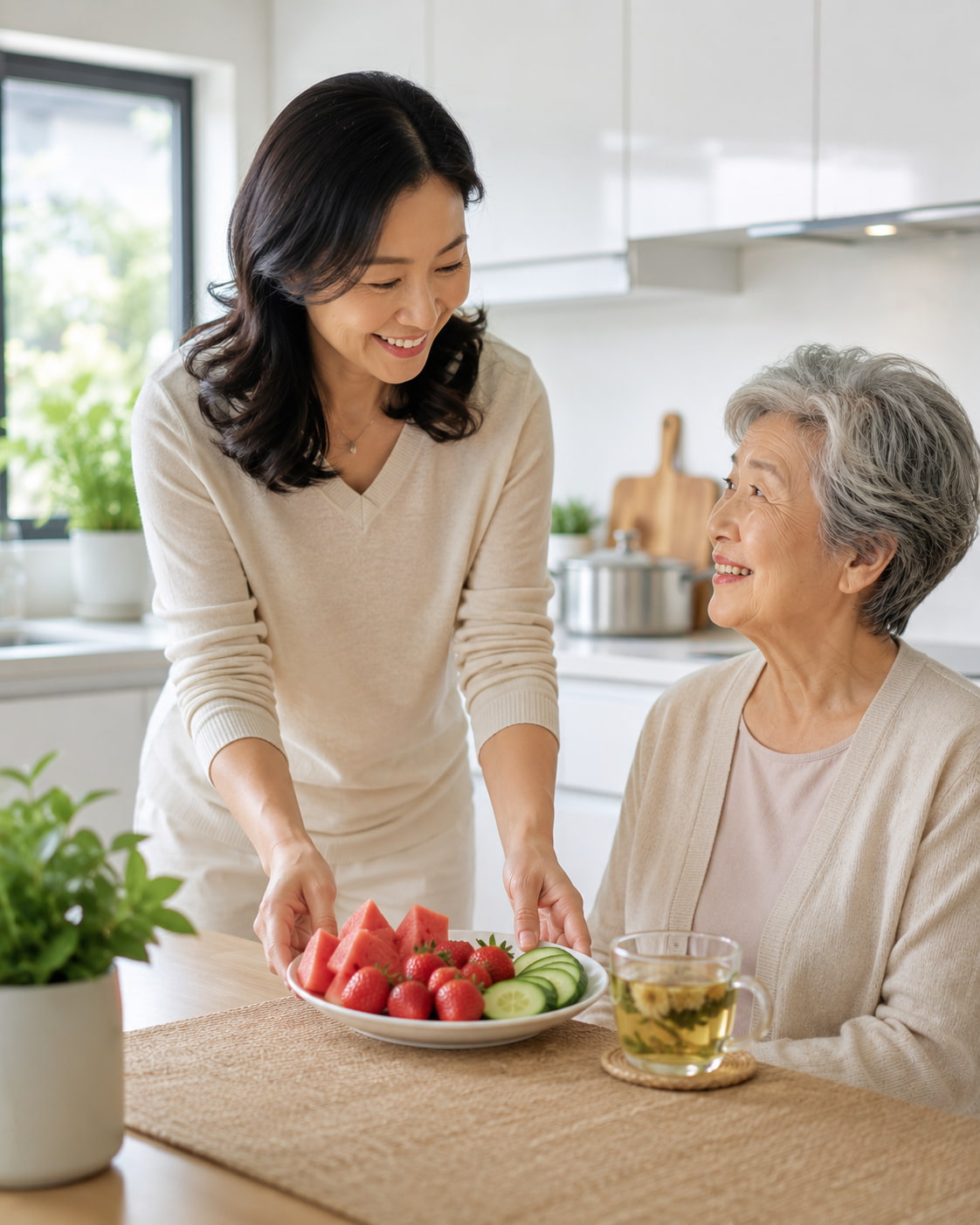
If your parent dislikes drinking large amounts of water, offer foods with naturally high water content such as watermelon, oranges, strawberries, cucumbers, soups, and broths. These foods help improve hydration while providing valuable nutrients.
3. Build Hydration into Daily Routines
Linking hydration with existing daily habits makes drinking water much easier to remember.
Offer a small glass of water after waking up, before each meal, with medications, and during afternoon breaks. Small, frequent drinks are often easier for older adults than large amounts at once.
4. Offer Different Beverage Choices
Many seniors simply become tired of plain water.
Try herbal tea, diluted fruit juice, milk, broth, or naturally flavored water with lemon, cucumber, or mint. Offering variety encourages consistent fluid intake throughout the day.
5. Keep Drinks Within Easy Reach
Limited mobility should never become a barrier to hydration.
Place lightweight cups or insulated tumblers beside your parent's favorite chair, bedside table, or dining area. Easy-grip cups and reusable straws can help older adults drink more independently.

Conclusion
Preventing dehydration requires small but consistent daily habits.
- Offer fluids before thirst develops.
- Include water-rich foods every day.
- Connect hydration with daily routines.
- Keep drinks within easy reach.
Simple hydration habits today can help protect your parent's energy, kidney health, and overall quality of life.
🔗 Related Posts
- [Caregiving Basics] Preventing Elderly Falls: 5 Safety Tips for a Secure Home
- [Care Options] Medicare vs. Medicaid: 5 Keys to Dual Eligibility Benefits
- [Caregiver Support] Caregiver Resentment: 5 Ways to Manage Chronic Anger
📚 Sources
National Institute on Aging (NIA). Healthy Eating, Nutrition, and Hydration for Older Adults.
Mayo Clinic. Dehydration: Symptoms and Causes.
Cleveland Clinic. Dehydration in Older Adults.
American Geriatrics Society (AGS). Health in Aging Foundation Resources.
Image Source: AI-generated images
'Caregiving Basics' 카테고리의 다른 글
| Preventing Elderly Falls: 5 Safety Tips for a Secure Home (0) | 2026.07.31 |
|---|---|
| Preventing Bedsores in Elderly: 5 Tips for Safe Skin Care (0) | 2026.07.28 |
| Senior Constipation: 5 Safe Ways to Relieve Discomfort at Home (0) | 2026.07.26 |
| Senior Low Blood Pressure: 5 Tips to Manage Dizziness at Home (0) | 2026.07.23 |
| Signs of Hearing Loss in Seniors: 5 Early Indicators to Watch (0) | 2026.07.20 |