Low blood pressure can increase the risk of dizziness and falls in older adults. Recognizing early symptoms and building simple daily habits can help improve safety and confidence at home.
Many families pay close attention to high blood pressure, but low blood pressure can also create serious health concerns for older adults. Feeling dizzy when standing up, losing balance, or becoming unusually tired may all be signs that deserve attention.
One common condition is orthostatic hypotension, which happens when blood pressure drops after standing. Learning how to recognize these changes and respond safely can help reduce fall risks and support independent living.
Here are five practical ways to manage low blood pressure at home.
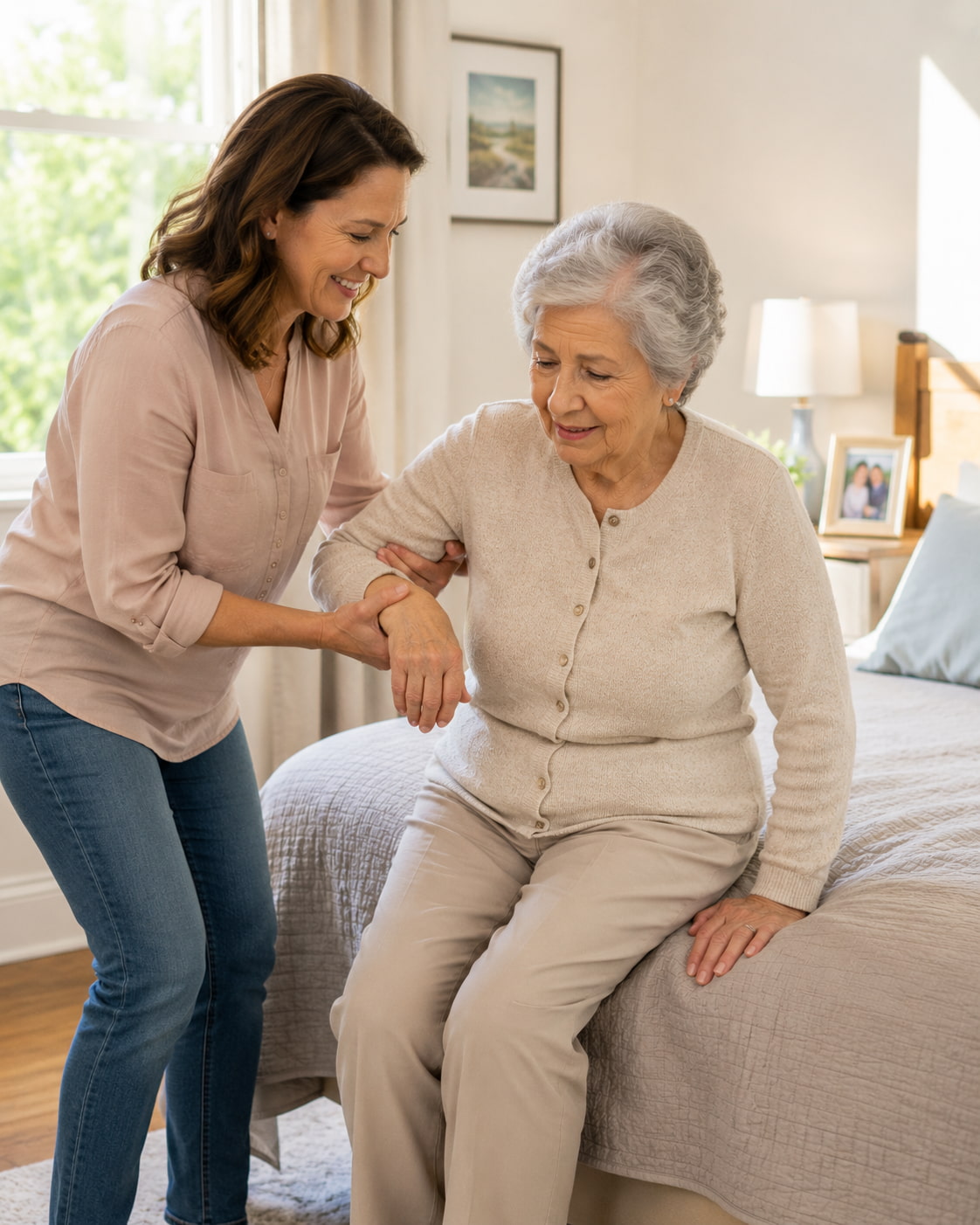
1. Stand Up Slowly
Standing too quickly can increase the chance of dizziness.
Encourage your parent to sit on the edge of the bed for a minute before standing. After standing, wait a few moments before walking. Holding onto a stable surface during this transition can also improve safety.
Frequently Asked Questions
Q. What are common symptoms of low blood pressure in older adults?
Lightheadedness, blurred vision, weakness, fatigue, and feeling unsteady after standing are common symptoms.
Q. Can medications contribute to low blood pressure?
Yes. Some medications, including certain blood pressure and heart medications, may lower blood pressure. Discuss any concerns with the prescribing healthcare professional.
Q. Does drinking enough water help?
Yes. Staying well hydrated can support healthy blood pressure and may reduce dizziness caused by dehydration.
2. Encourage Regular Hydration
Not drinking enough fluids can make low blood pressure worse.
Offer water regularly throughout the day, especially during warm weather or after physical activity. Keeping a water bottle within easy reach can encourage consistent hydration.
3. Choose Smaller, Balanced Meals
Large meals sometimes cause blood pressure to fall after eating.
Serving smaller meals more often during the day may help reduce this effect. Including balanced amounts of protein, healthy fats, and fiber may also support steady energy levels.

4. Ask About Compression Stockings
Compression stockings may help some older adults improve circulation.
Because they are not appropriate for everyone, ask your parent's healthcare professional whether they are suitable before beginning regular use.
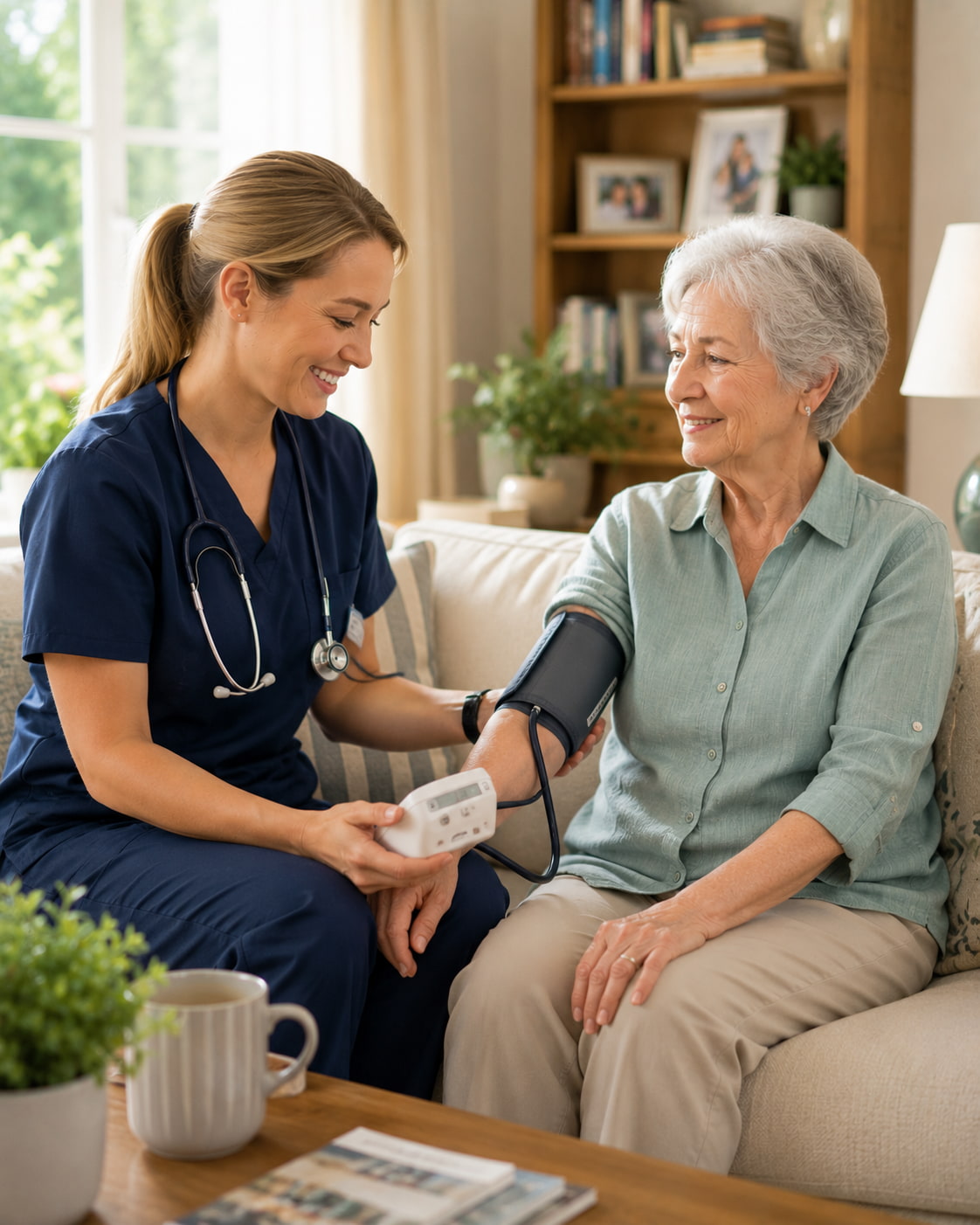
5. Track Blood Pressure and Review Medications
Keeping simple records can help identify patterns.
Measure blood pressure at different times of the day if recommended by a healthcare professional. Bring these records to medical appointments so treatment plans can be reviewed when needed.
Conclusion
Managing low blood pressure starts with simple daily habits.
- Stand up slowly.
- Stay hydrated.
- Eat balanced meals.
- Monitor symptoms regularly.
Small lifestyle changes and regular communication with healthcare professionals can help older adults stay safer and more confident at home.
🔗 Related Posts
- Signs of Hearing Loss in Seniors: 5 Early Indicators to Watch
- Senior Appetite Loss: 5 Ways to Stimulate Appetite at Home
- Senior Mobility Decline: 5 Ways to Support Safer Walking at Home
- Safe and Dry: 5 Essential Bathroom Safety Tips for Seniors
📚 Sources
National Institute on Aging (NIA)
American Heart Association (AHA)
Mayo Clinic
Harvard Health Publishing
🖼️ Image Source
AI-generated images
'Caregiving Basics' 카테고리의 다른 글
| Preventing Bedsores in Elderly: 5 Tips for Safe Skin Care (0) | 2026.07.28 |
|---|---|
| Senior Constipation: 5 Safe Ways to Relieve Discomfort at Home (0) | 2026.07.26 |
| Signs of Hearing Loss in Seniors: 5 Early Indicators to Watch (0) | 2026.07.20 |
| Senior Appetite Loss: 5 Ways to Stimulate Appetite at Home (0) | 2026.07.18 |
| Senior Mobility Decline: 5 Ways to Support Safer Walking at Home (0) | 2026.07.15 |