Protecting skin health is an essential part of caring for older adults with limited mobility. Recognizing early warning signs and building simple daily routines can help prevent pressure ulcers before they become serious.
Older adults who spend long periods in bed or in a wheelchair face a higher risk of developing pressure ulcers, also known as bedsores. Constant pressure on the same areas of the body reduces blood flow, allowing skin damage to develop gradually.
The earliest signs often appear as mild redness or discoloration and can easily be mistaken for minor skin irritation. Regular skin checks and consistent preventive care can greatly reduce the risk of painful complications.
Here are five practical ways to help prevent bedsores at home.
1. Reposition Every Two Hours
Changing body position regularly is the most effective way to reduce prolonged pressure.
Help your parent change positions at least every two hours while in bed. If they spend most of the day sitting, encourage small weight shifts every 15–30 minutes whenever possible.

Frequently Asked Questions
Q. What is the earliest sign of a pressure ulcer?
Persistent redness, discoloration, warmth, or skin that does not return to its normal color after pressure is removed may be an early warning sign.
Q. Which body areas are most vulnerable?
Common areas include the tailbone, hips, heels, elbows, shoulders, and the back of the head.
Q. Should red skin be massaged?
No. Avoid rubbing or massaging areas with redness. Instead, remove pressure and keep the skin clean and dry.
2. Check the Skin Every Day
Daily inspections help detect problems before skin damage becomes severe.
Look carefully at pressure points while helping your parent dress or bathe. Pay attention to changes in color, swelling, warmth, or unusual tenderness.
3. Keep Skin Clean and Dry
Healthy skin is better protected from breakdown.
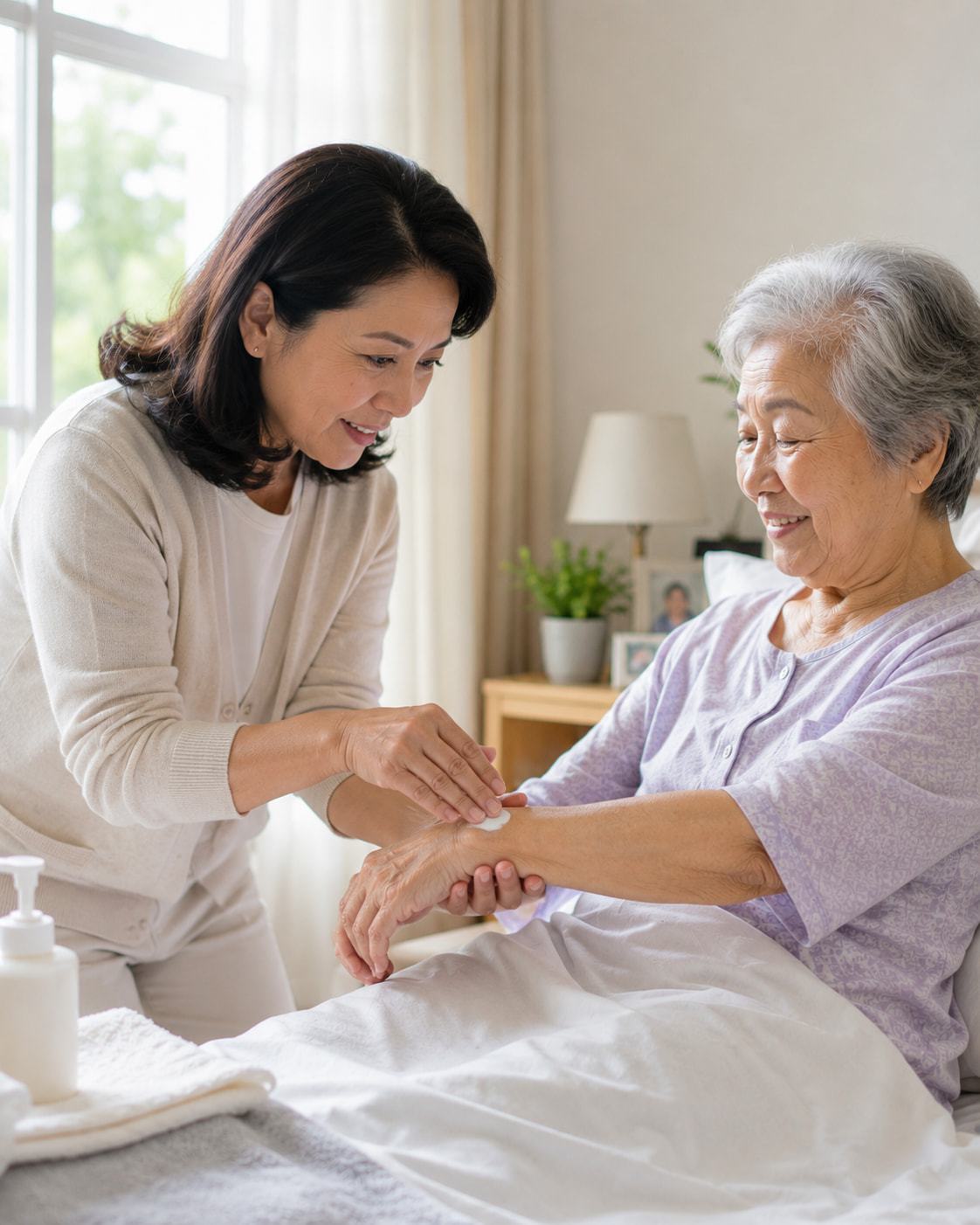
Use mild soap and warm water, dry the skin gently, and change wet clothing or incontinence products promptly. Barrier creams may also help protect vulnerable skin.
4. Use Pressure-Relieving Equipment
Supportive cushions and mattresses reduce continuous pressure.
Pressure-relieving mattresses, wheelchair cushions, and foam supports can improve comfort while helping distribute body weight more evenly.
5. Support Skin Health with Good Nutrition
Healthy skin depends on proper nutrition and hydration.
Serve meals that include lean protein, vegetables, fruits, and adequate fluids. Good nutrition supports tissue repair and helps maintain healthy skin.

Conclusion
Preventing bedsores begins with small daily habits.
- Reposition regularly.
- Inspect the skin every day.
- Keep the skin clean and dry.
- Use pressure-relieving equipment.
- Support healthy nutrition and hydration.
Consistent preventive care can greatly reduce the risk of pressure ulcers while improving comfort, safety, and quality of life for your aging parent.
🔗 Related Posts
- Senior Constipation: 5 Safe Ways to Relieve Discomfort at Home
- Senior Low Blood Pressure: 5 Tips to Manage Dizziness at Home
- Signs of Hearing Loss in Seniors: 5 Early Indicators to Watch
📚 Sources
National Institute on Aging (NIA)
Wound, Ostomy and Continence Nurses Society (WOCN)
Mayo Clinic
Johns Hopkins Medicine
Image Source: AI-generated images
'Caregiving Basics' 카테고리의 다른 글
| Preventing Dehydration in Elderly: 5 Hydration Tips for Seniors (0) | 2026.08.03 |
|---|---|
| Preventing Elderly Falls: 5 Safety Tips for a Secure Home (0) | 2026.07.31 |
| Senior Constipation: 5 Safe Ways to Relieve Discomfort at Home (0) | 2026.07.26 |
| Senior Low Blood Pressure: 5 Tips to Manage Dizziness at Home (0) | 2026.07.23 |
| Signs of Hearing Loss in Seniors: 5 Early Indicators to Watch (0) | 2026.07.20 |