Falls are one of the leading causes of serious injuries in older adults. A few simple home safety improvements can greatly reduce the risk and help aging parents remain independent.
Many falls happen during everyday activities such as walking to the bathroom at night or reaching for frequently used items. These accidents are often preventable with better lighting, safer flooring, and thoughtful home organization.
Here are five practical ways to create a safer home and reduce the risk of falls.
1. Remove Common Tripping Hazards
Small obstacles can easily become major risks.
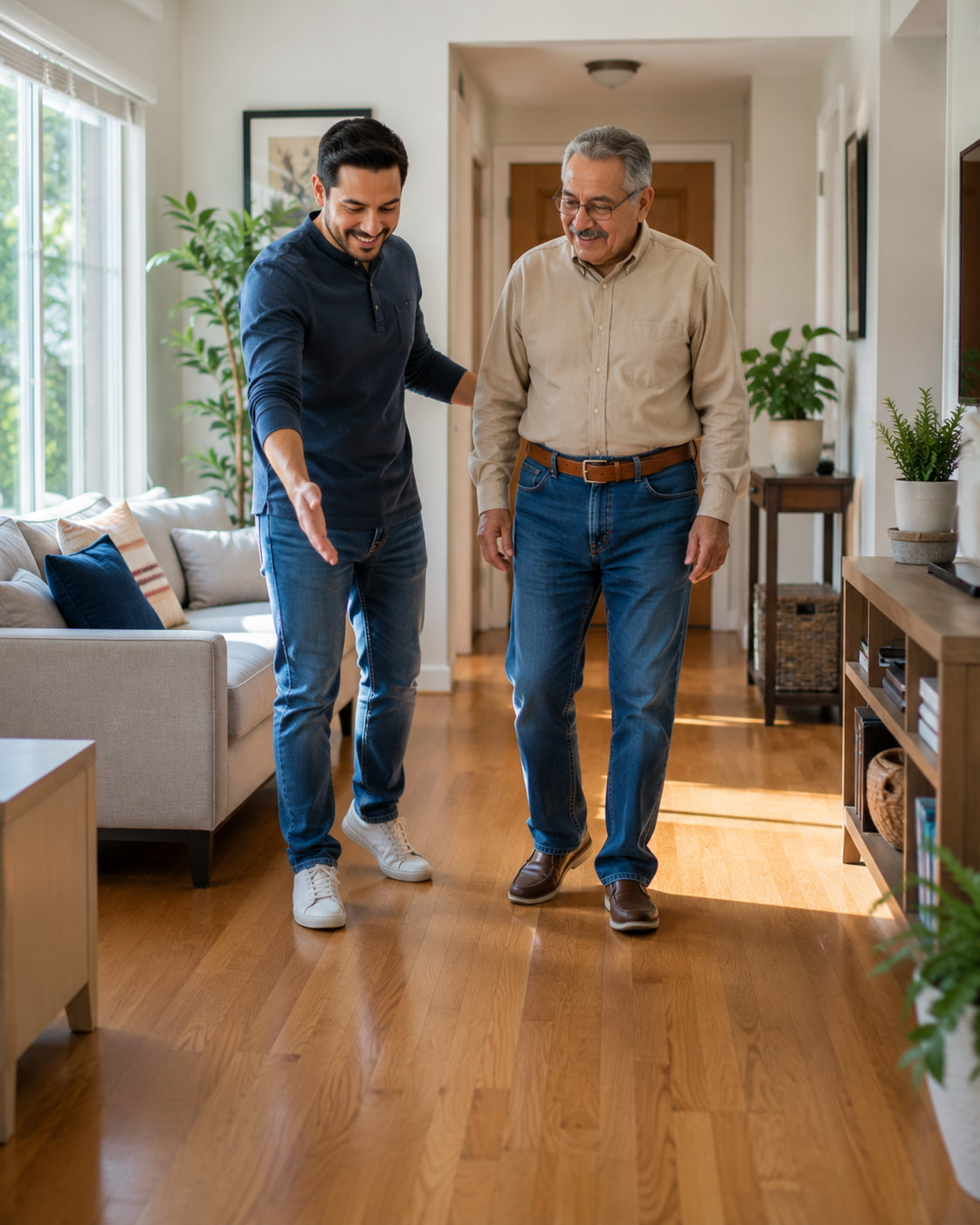
Remove loose rugs, electrical cords, and unnecessary clutter from walking paths. Keep frequently used items within easy reach to avoid climbing on stools or chairs.
Frequently Asked Questions
Q. What causes most falls at home?
Loose rugs, poor lighting, slippery floors, and obstacles in walkways are among the most common causes.
Q. Can exercise help prevent falls?
Yes. Balance and strength exercises can improve stability and reduce the risk of falling.
Q. Should older adults wear shoes indoors?
Supportive shoes with non-slip soles are generally safer than socks or loose slippers on smooth floors.
2. Improve Lighting Throughout the Home
Good lighting helps older adults recognize hazards more easily.
Install night lights in bedrooms, hallways, and bathrooms. Make sure light switches are easy to reach and replace dim bulbs with brighter LED lighting.
3. Make the Bathroom Safer
Bathrooms are one of the highest-risk areas for falls.
Install securely mounted grab bars near the toilet and inside the shower. Use non-slip bath mats and consider a shower chair for additional stability.

4. Choose Safe Footwear
Proper footwear provides better traction and balance.
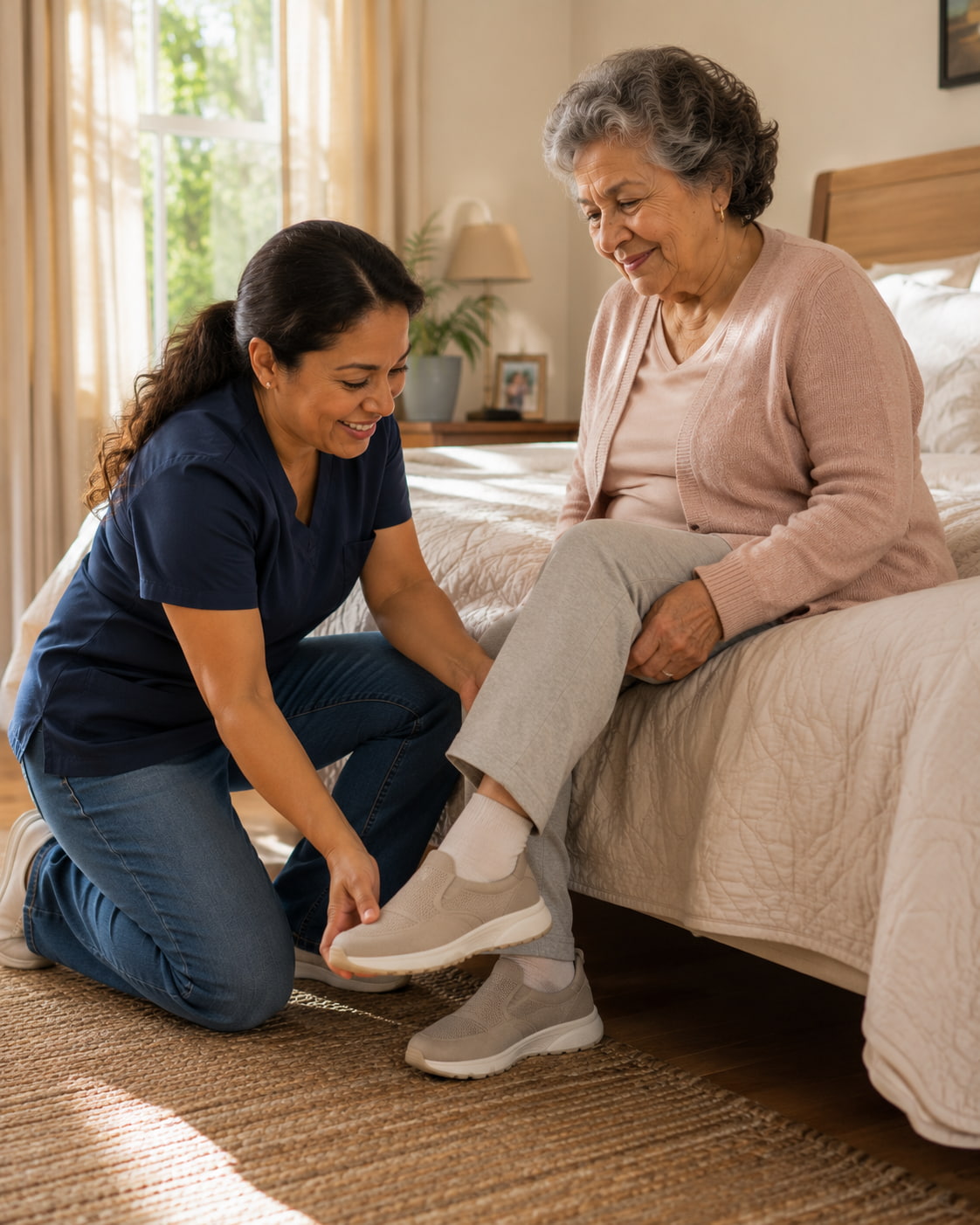
Encourage your parent to wear supportive shoes with non-slip soles instead of walking barefoot or wearing loose slippers.
5. Review Medications Regularly
Some medications may increase the risk of dizziness or falls.
Ask your parent's healthcare provider to review medications regularly, especially if they have experienced balance problems or recent falls.
Conclusion
Preventing falls starts with small daily changes.
- Remove tripping hazards.
- Improve lighting.
- Install bathroom safety equipment.
- Wear supportive footwear.
- Review medications with healthcare providers.
A safer home helps older adults remain active, confident, and independent.
🔗 Related Posts
- Caregiver Breaks: 5 Ways to Practice Guilt-Free Respite
- Nursing Home Contracts: 5 Critical Clauses to Check Before Signing
- Preventing Bedsores in Elderly: 5 Tips for Safe Skin Care
📚 Sources
Centers for Disease Control and Prevention (CDC)
National Institute on Aging (NIA)
American Occupational Therapy Association (AOTA)
Mayo Clinic
Image Source: AI-generated images
'Caregiving Basics' 카테고리의 다른 글
| Preventing Dehydration in Elderly: 5 Hydration Tips for Seniors (0) | 2026.08.03 |
|---|---|
| Preventing Bedsores in Elderly: 5 Tips for Safe Skin Care (0) | 2026.07.28 |
| Senior Constipation: 5 Safe Ways to Relieve Discomfort at Home (0) | 2026.07.26 |
| Senior Low Blood Pressure: 5 Tips to Manage Dizziness at Home (0) | 2026.07.23 |
| Signs of Hearing Loss in Seniors: 5 Early Indicators to Watch (0) | 2026.07.20 |