A safe bedroom can significantly reduce nighttime fall risks. Small changes in lighting, bed setup, and daily habits help older adults stay safe and independent.
Nighttime is often when family caregivers worry the most.
During the day, someone may be nearby to help. At night, however, an aging parent may need to get out of bed alone to use the bathroom or get a drink of water.
Even a familiar bedroom can become dangerous in the dark.
Poor lighting, an unstable bed height, loose rugs, and dizziness after standing up are all common reasons older adults experience nighttime falls.
Fortunately, many of these risks can be reduced with a few practical changes.
Here are five simple ways to make your parent's bedroom safer at night.
1. Make Sure the Bed Is the Right Height
A bed that is too high or too low makes standing up more difficult.
When sitting on the edge of the bed, your parent's feet should rest flat on the floor with knees comfortably bent.
A stable bed height improves balance and reduces the risk of slipping when standing.

💡 Frequently Asked Questions
Q. Are bed rails always recommended?
Not always. Full-length bed rails can sometimes create additional risks if an older adult tries to climb over them. Bed assist handles are often a safer alternative.
Q. Why do falls happen more often at night?
Darkness, dizziness, medications, and rushing to the bathroom all increase fall risk during nighttime hours.
Q. What is the easiest bedroom safety improvement?
Installing motion-activated night lights and keeping a clear path to the bathroom are two of the simplest and most effective changes.
2. Install Motion-Activated Night Lights
Older adults should never have to walk across a dark room.
Motion-activated lights automatically illuminate the floor when someone gets out of bed, making nighttime walking much safer.
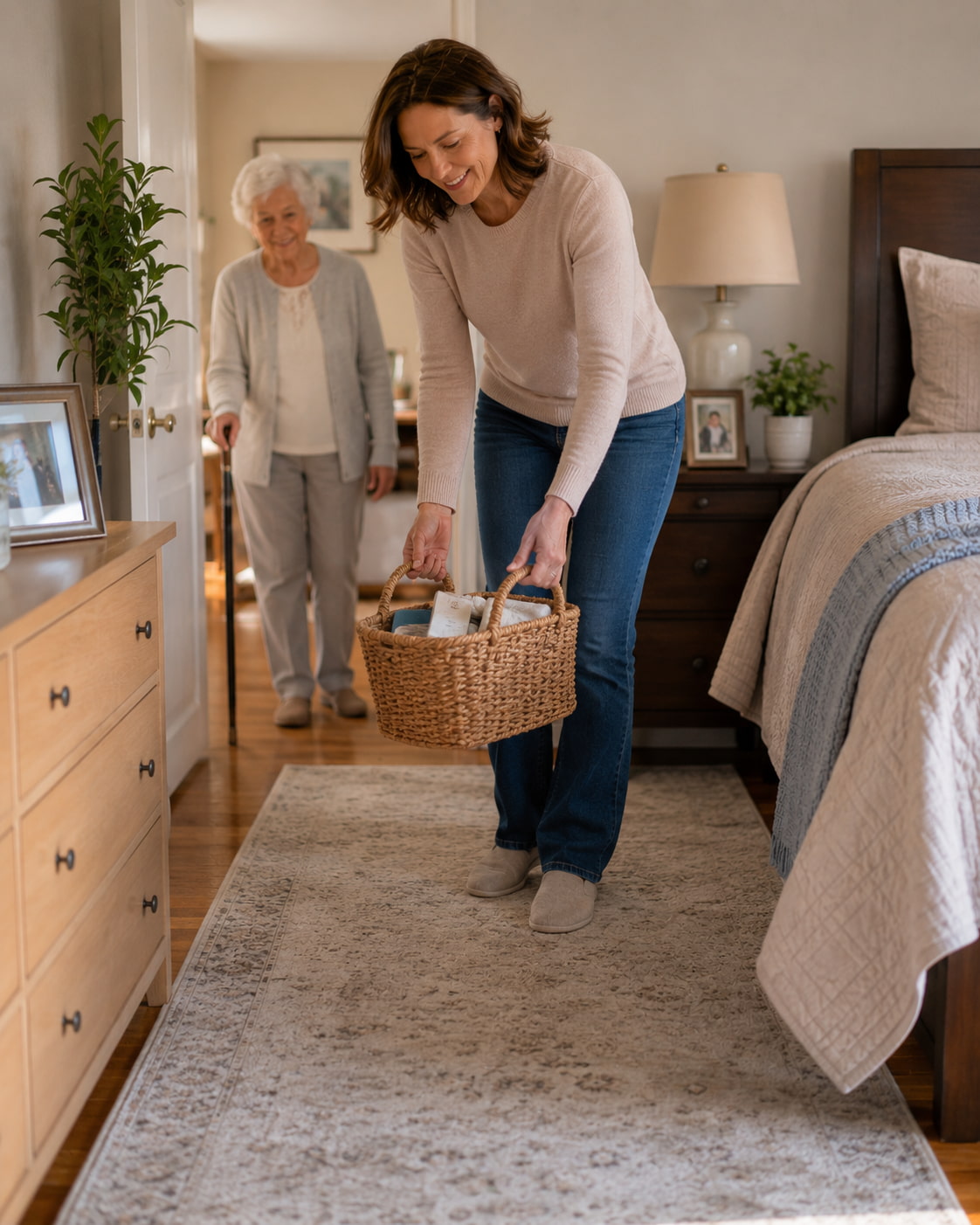
3. Keep the Path to the Bathroom Clear
Remove anything that could become a tripping hazard.
Check regularly for:
- Loose rugs
- Shoes
- Extension cords
- Storage boxes
A clear walking path helps prevent unexpected falls.
4. Encourage Standing Up Slowly
Many older adults experience dizziness immediately after getting out of bed.
Encourage your parent to:
- Sit on the edge of the bed for 30–60 seconds.
- Stand slowly.
- Hold a stable surface before walking.
These simple habits help the body adjust safely.
5. Consider Simple Safety Technology
Technology can provide extra reassurance for families.
Helpful options include:
- Fall detection watches
- Bed exit sensors
- Motion sensors
- Emergency alert devices
These tools cannot prevent every fall, but they can help someone receive assistance more quickly.

Conclusion
Creating a safer bedroom does not require major renovations.
A safer bed.
Better lighting.
A clear pathway.
Simple daily habits.
Together, these small improvements can greatly reduce nighttime fall risks and help older adults remain safe, confident, and independent at home.
🔗 Related Posts
- Watching Your Parents Age: How to Cope with Anticipatory Grief
- Why an Elderly Parent Refuses to Eat: 5 Signs of Senior Malnutrition
- Senior Home Safety Checklist: 10 Things Families Should Check During Every Visit
- 5 Hidden Fall Hazards in Your Aging Parent's Home (And How to Fix Them)
📚 Sources
National Institute on Aging (NIA)
Centers for Disease Control and Prevention (CDC)
Family Caregiver Alliance (FCA)
AARP HomeFit Guide
🖼️ Image Source
AI-generated images