Mobility decline can increase the risk of falls for older adults. Simple home adjustments and regular movement can help support safer walking and everyday independence.
As parents grow older, gradual changes in strength, balance, and mobility often become noticeable. Walking more slowly, hesitating before standing up, or holding onto furniture may be early signs that extra support is needed.
Fortunately, a few practical changes can improve safety and help older adults stay active at home.
Here are five simple ways to support safer walking every day.
1. Recognize Early Signs of Mobility Changes
Early warning signs are often easy to miss.
Watch for shuffling feet, difficulty standing up, slower walking, or using walls and furniture for balance. Noticing these changes early makes it easier to discuss concerns with your parent's healthcare provider.

💡 Frequently Asked Questions
Q. Is a cane or a walker better?
It depends on individual needs. A healthcare professional or physical therapist can recommend the most appropriate mobility aid.Q. My parent refuses to use a walking aid. What should I do?
Focus on maintaining independence rather than emphasizing limitations. Many older adults are more open to using mobility aids when they understand the benefits.Q. Can mobility improve with age?
While aging naturally affects strength, regular physical activity, proper nutrition, and professional guidance may help improve mobility and balance.
2. Keep Walking Paths Clear
A clutter-free home reduces fall risks.
Remove loose rugs, electrical cords, small furniture, and unnecessary obstacles. Wide, open walkways make moving around the home safer and more comfortable.
3. Wear Supportive Shoes
Proper footwear improves stability.
Choose comfortable shoes with supportive soles and good traction. Avoid loose slippers or walking in socks on smooth floors whenever possible.

4. Encourage Gentle Daily Exercise
Regular movement helps maintain strength and balance.
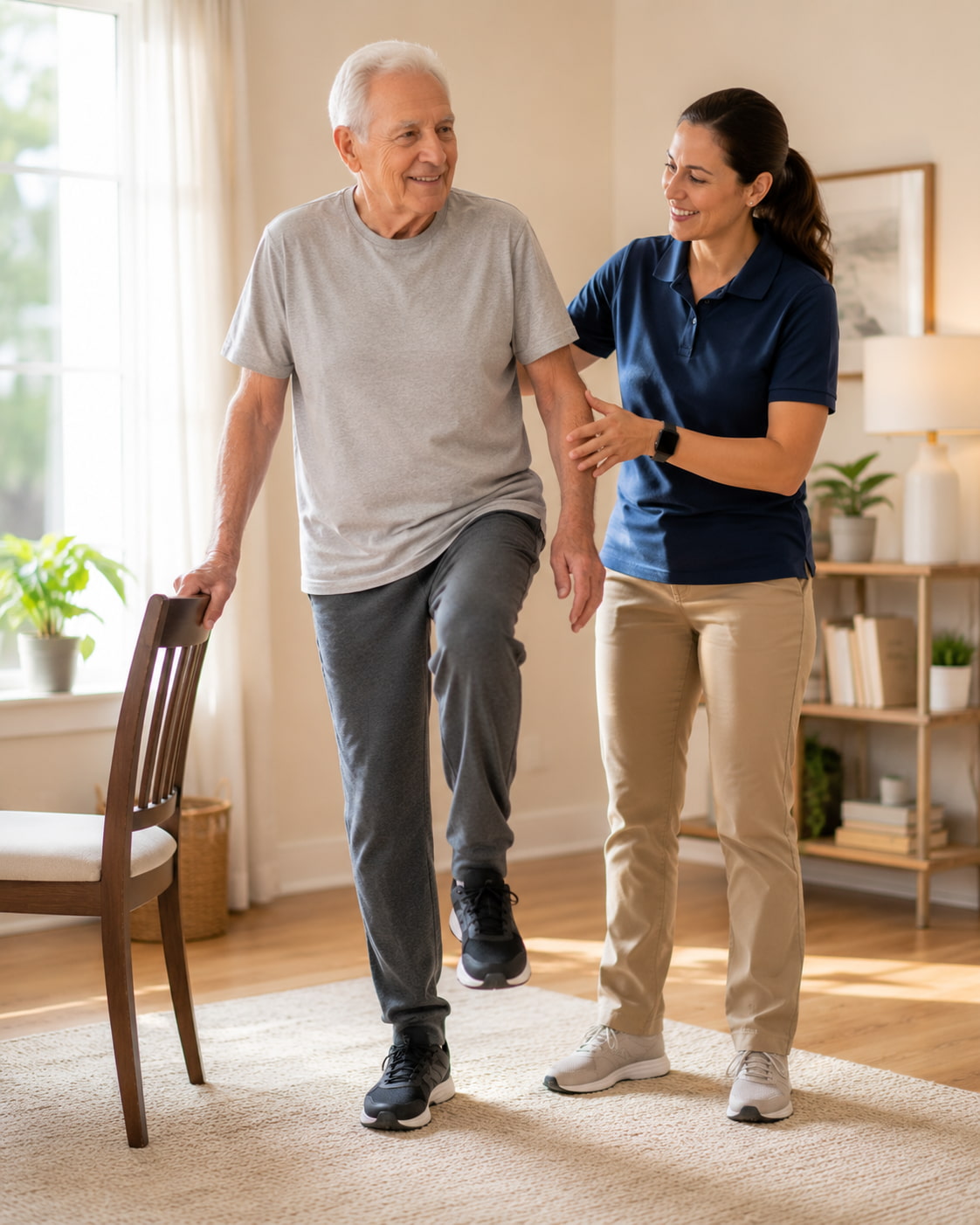
Simple activities such as chair exercises, short walks, standing balance exercises, or light stretching can support mobility. Encourage activities that match your parent's ability and comfort level.
5. Ask for a Professional Mobility Assessment
Walking changes sometimes have underlying causes.
If you notice frequent stumbling, worsening balance, or repeated falls, discuss these concerns with your parent's healthcare provider. A physical therapist may recommend exercises or mobility aids that fit your parent's specific needs.
Conclusion
Healthy movement supports safer everyday living.
- Notice early warning signs.
- Keep pathways clear.
- Choose supportive footwear.
- Stay active every day.
Small daily habits can help older adults maintain confidence, reduce fall risks, and remain independent at home.
🔗 Related Posts
- Safe and Dry: 5 Essential Bathroom Safety Tips for Seniors
- Safe and Organized: 5 Tips for Managing Senior Medications at Home
- Staying Hydrated: 5 Signs of Senior Dehydration and How to Prevent It
- Senior Home Safety Checklist: 10 Things Families Should Check During Every Visit
📚 Sources
National Institute on Aging (NIA)
Centers for Disease Control and Prevention (CDC)
American Physical Therapy Association (APTA)
Mayo Clinic
🖼️ Image Source
AI-generated images
'Caregiving Basics' 카테고리의 다른 글
| Signs of Hearing Loss in Seniors: 5 Early Indicators to Watch (0) | 2026.07.20 |
|---|---|
| Senior Appetite Loss: 5 Ways to Stimulate Appetite at Home (0) | 2026.07.18 |
| Safe and Dry: 5 Essential Bathroom Safety Tips for Seniors (0) | 2026.07.12 |
| Safe and Organized: 5 Tips for Managing Senior Medications at Home (0) | 2026.07.10 |
| Staying Hydrated: 5 Signs of Senior Dehydration and How to Prevent It (0) | 2026.07.07 |