The bathroom is one of the most dangerous places for older adults. Simple safety upgrades and daily habits can greatly reduce the risk of slips, falls, and serious injuries.
Bathrooms account for many of the falls and injuries that occur at home among older adults. Wet floors, poor lighting, and the need to step over bathtub edges create hazards that become more dangerous as balance, strength, and vision change with age.
Fortunately, most bathroom accidents are preventable. A few practical modifications and daily safety habits can make bathing and toileting much safer while helping older adults maintain their independence.
Here are five essential bathroom safety tips every family caregiver should know.
1. Install Grab Bars in Key Locations
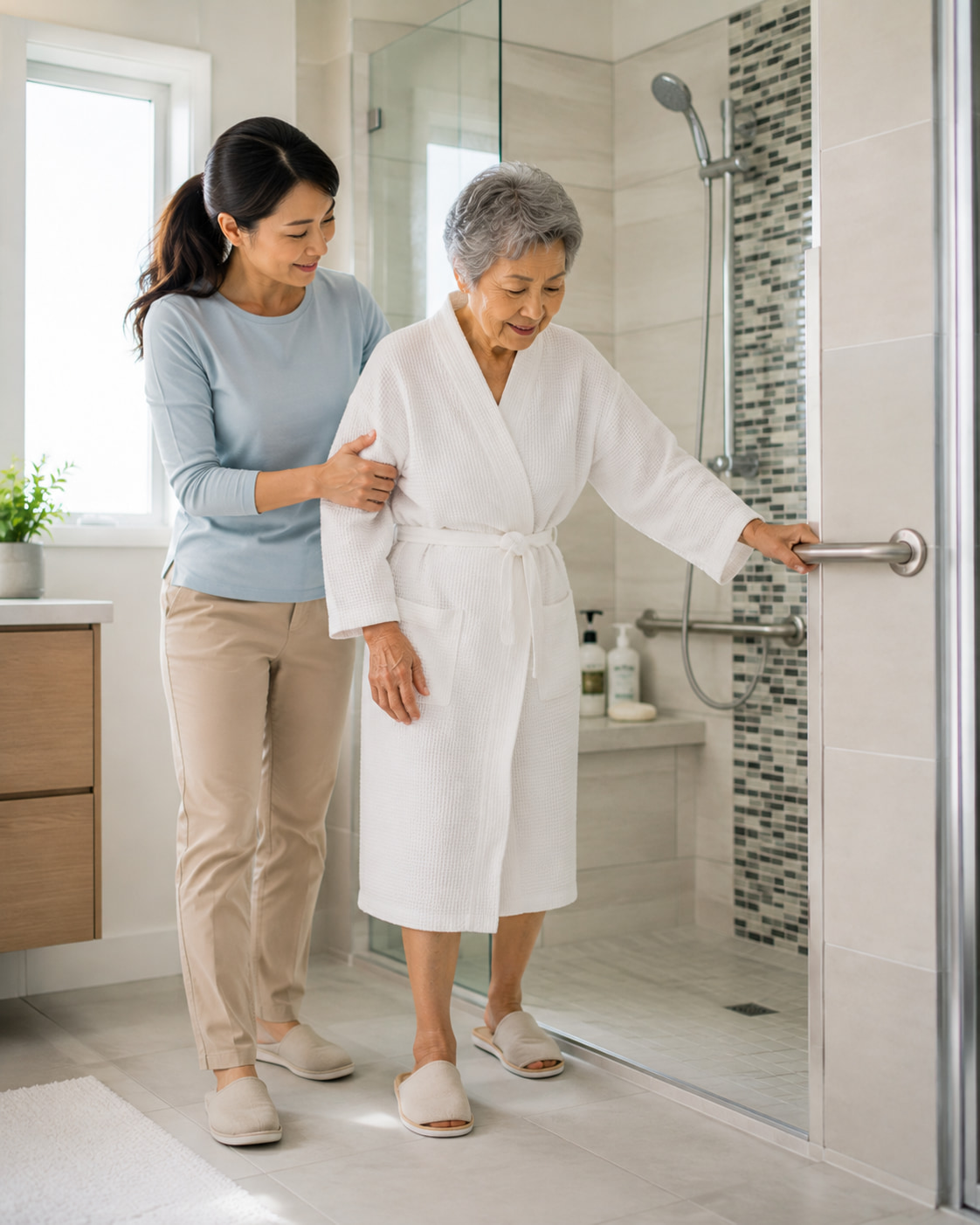
Secure grab bars provide stable support during transfers.
Install professionally anchored grab bars beside the toilet, inside the shower, and near the bathtub. Avoid relying on towel bars or suction-cup handles, which are not designed to support body weight.
Frequently Asked Questions
Q. Are suction grab bars safe?
They may be useful for temporary balance assistance but should never replace permanently installed grab bars.
Q. What flooring is safest for senior bathrooms?
Slip-resistant flooring with good drainage is generally the safest option.
Q. Should seniors use a shower chair?
Yes. A shower chair can improve safety and reduce fatigue, especially for seniors with poor balance or limited endurance.
2. Reduce Slip Hazards
Wet floors are the leading cause of bathroom falls.
Use non-slip bath mats with rubber backing, wipe up standing water immediately, and avoid loose rugs.
Wear non-slip footwear instead of socks when entering the bathroom.
Bathroom Safety Product Comparison
| Grab Bars | Most seniors | Stable support | Professional installation recommended |
| Shower Chair | Balance problems | Reduces fatigue | Choose adjustable height |
| Raised Toilet Seat | Knee or hip problems | Easier transfers | Verify proper fit |
| Handheld Shower Head | Limited mobility | Easier seated bathing | May require installation |
3. Improve Bathroom Lighting
Good lighting reduces trips and missteps.
Install bright LED lighting and motion-sensor nightlights for nighttime bathroom visits.
Keep light switches easy to reach from the bedroom.

4. Organize Frequently Used Items
Avoid unnecessary bending or reaching.
Store towels, soap, shampoo, medications, and hygiene products between waist and shoulder height.
Avoid climbing onto stools or reaching above shoulder level.
5. Prepare for Emergencies
Quick access to help reduces injury severity.
Consider emergency call buttons, waterproof medical alert devices, or wearable emergency pendants.
Encourage seniors to keep a phone nearby if possible.

Bathroom Safety Checklist
□ Grab bars are securely installed.
□ Non-slip bath mats are in place.
□ Bathroom lighting is bright.
□ Nightlights illuminate the route to the bathroom.
□ Frequently used items are easy to reach.
□ Emergency help is available if needed.
Which Bathroom Safety Equipment May Be Best?
Basic Safety Setup
- Grab bars
- Non-slip bath mat
- Bright lighting
- Nightlight
For Seniors with Mobility Problems
- Shower chair
- Raised toilet seat
- Handheld shower head
- Medical alert device
Conclusion
Bathroom safety starts with simple preventive steps.
- Install secure grab bars.
- Remove slipping hazards.
- Improve lighting.
- Organize supplies safely.
- Prepare for emergencies.
Remember: preventing one bathroom fall can protect months of independence and recovery.
Related Posts
- [Caregiving Basics] Why Seniors Get Dizzy When Standing Up: 5 Ways to Prevent Falls
- [Caregiving Basics] Why Seniors Get Bedsores: 5 Ways to Prevent Pressure Ulcers
- [Caregiving Basics] Why Seniors Fall at Home: 5 Essential Home Safety Modifications
Sources
National Institute on Aging (NIA)
Centers for Disease Control and Prevention (CDC)
Mayo Clinic
American Occupational Therapy Association (AOTA)
Image Source
AI-generated images
'Caregiving Basics' 카테고리의 다른 글
| Senior Appetite Loss: 5 Ways to Stimulate Appetite at Home (0) | 2026.07.18 |
|---|---|
| Senior Mobility Decline: 5 Ways to Support Safer Walking at Home (0) | 2026.07.15 |
| Safe and Organized: 5 Tips for Managing Senior Medications at Home (0) | 2026.07.10 |
| Staying Hydrated: 5 Signs of Senior Dehydration and How to Prevent It (0) | 2026.07.07 |
| How to Prevent Elderly Bed Falls: 5 Nighttime Safety Steps (0) | 2026.07.05 |