Small balance and movement changes that may quietly increase fall risk and affect daily confidence
At first, it seemed like simple caution.
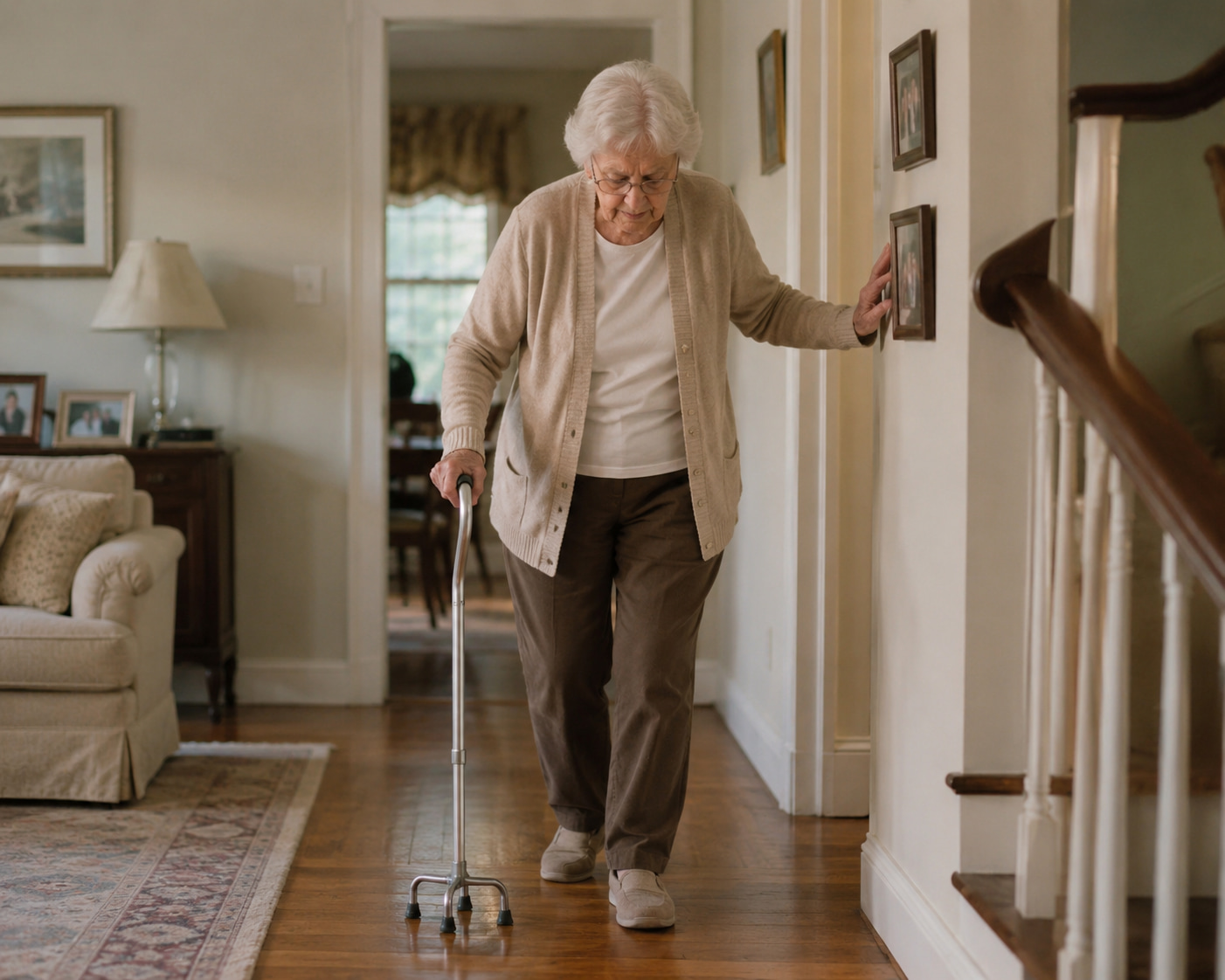
My father started holding onto walls while walking.
He stood up more slowly from chairs.
Stairs suddenly seemed more difficult than before.
Families often notice these small movement changes gradually.
And over time, balance changes can quietly affect
confidence, independence, and everyday safety.
1. Balance Changes Often Begin Gradually
In many older adults,
balance and movement changes happen slowly over time.
Families may notice:
• Walking more carefully
• Holding onto furniture
• Slower movements
• Hesitation on stairs
At first, these changes may seem minor.
Frequently Asked Questions
Why do elderly parents become less steady while walking?
Aging, muscle weakness, fatigue, medication effects, vision changes, and reduced activity can all affect balance.
Are small balance problems dangerous?
Even mild balance difficulties may increase fall risk over time.
When should families become concerned?
When movement changes begin affecting safety, confidence, or daily routines.
2. Confidence Often Changes Before Mobility
Sometimes the first change is emotional rather than physical.
Older adults may begin feeling:
• Nervous about falling
• Less confident outside
• Uncomfortable walking alone
• More cautious during everyday movement
Confidence may slowly shrink before major falls occur.
3. Daily Life May Slowly Become More Limited
Over time, balance concerns may affect daily routines too.
Families may notice:
• Fewer outings
• Avoiding stairs
• Less physical activity
• Spending more time sitting at home
Daily life itself may slowly become smaller.

4. Families Often Notice the Change Later
Many caregivers later realize
the balance changes started earlier than expected.
👉 Holding onto tables
👉 Slower walking speed
👉 Careful movements around the house
Small safety changes often build gradually over time.
5. Small Safety Support Often Helps Most
In many families,
simple adjustments feel more natural than dramatic changes.
• Better lighting
• Clear walking paths
• Supportive footwear
• Walking together regularly
Small routine changes may help maintain confidence.

6. When Balance Changes Affect Safety
Sometimes balance difficulties begin creating real safety concerns.
Families may begin noticing:
• Near falls
• Trouble standing up
• Difficulty walking outside alone
• Increased fear of movement
At this stage, additional support may help.
See Small Mobility Changes Families Often Notice First
See Best Fall Detection Devices for Elderly in 2026
Conclusion
Balance changes often begin quietly.
Not with one dramatic fall,
but with many small careful movements repeated over time.
And families are often the first to notice
that confidence in movement is slowly changing.
Related Posts
- Small Mobility Changes Families Often Notice First
- Sleep Changes Families Often Notice in Elderly Parents
- Best Fall Detection Devices for Elderly in 2026
- Elderly Living Alone Safety Checklist
Sources
World Health Organization (WHO)
National Institute on Aging (NIA)
Centers for Disease Control and Prevention (CDC)
AARP
Image Source
Magnific
AI-generated images